
Leak detection and water-path tracing
Leaks often show up far from the entry point. We inspect likely ingress points first, including valleys, step flashing, pipe penetrations, skylight curbs, and roof-to-wall transitions.
Serving Mill Valley, California & surrounding areas
24/7 Response Answered live
One call instead of ten No web forms, no callback spam Booking Fall & Winter 2026
Roof repair · Mill Valley
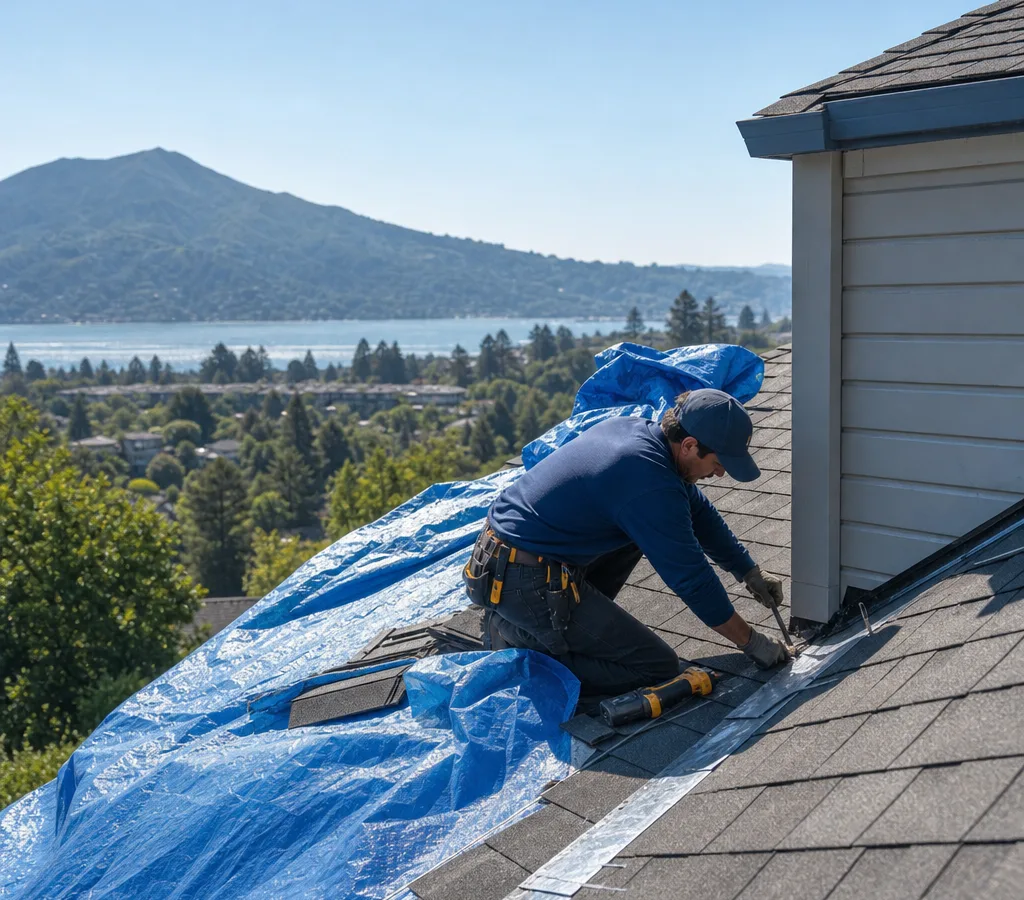
Stop leaks, replace damaged materials, and restore roof performance with clean, careful repairs that fit your roof system and the way homes sit on Mill Valley's hillsides and tree-lined lots.
Skip the 3-hour Google rabbit hole — we’ve already done the vetting
One conversation, not ten voicemails and seven web forms
24/7 response — talk to a real person who actually knows Mill Valley
A real person answers. No pressure. No obligation.
If you searched for roof repair Mill Valley, you probably have one of two problems: active water getting in, or visible roof damage that you want handled before the next rain. Roofing Mill Valley focuses on repair work that solves the cause, not just the symptom. That usually means tracing the water path, checking flashing and transitions, and restoring the roof assembly so it sheds water the way it was designed to.
Mill Valley roofs face a mix of coastal moisture, windy weather, and heavy tree debris. Valleys load up with leaves, branches scrape shingles, and moss or grime can hold moisture against the roof surface. Repairs have to account for those conditions and the reality that many homes sit on slopes with tight access. We plan for safe setup, protect landscaping and walkways, and keep the work area tidy so the repair does not turn into a mess around your home.
You will get a clear scope: what failed, what we are repairing, the materials we will use, and what we recommend watching next. If the roof is near end of life, we will say so plainly so you can make a practical decision instead of stacking repairs on a roof that cannot reasonably be restored.
Inspection priorities
Leaks often show up far from the entry point. We inspect likely ingress points first, including valleys, step flashing, pipe penetrations, skylight curbs, and roof-to-wall transitions.
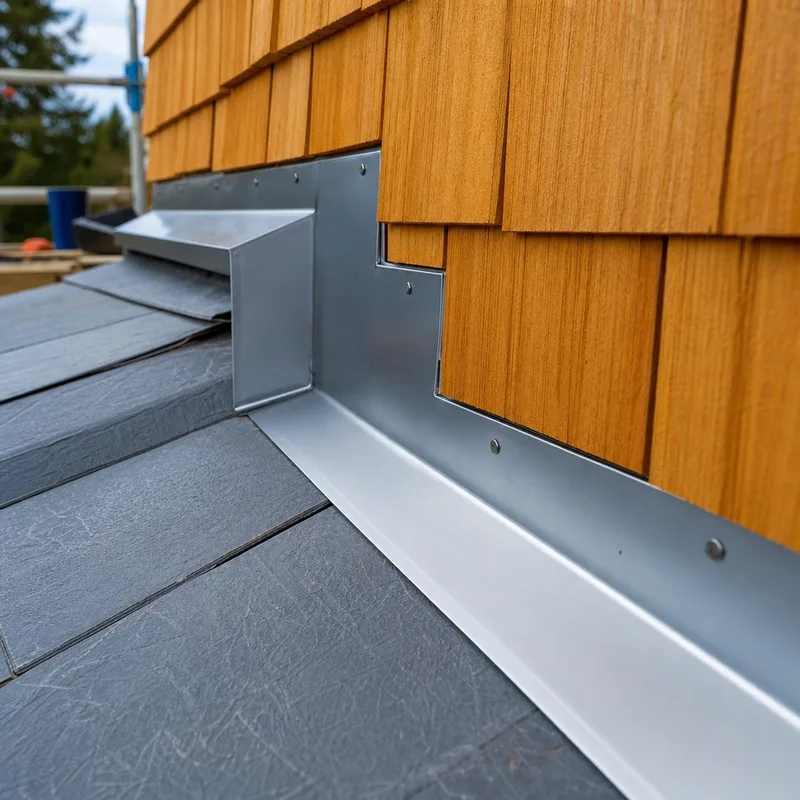
Loose, corroded, or improperly lapped flashing is a top leak source. We repair or replace flashing at chimneys, sidewalls, headwalls, and around penetrations using compatible materials and correct detailing.
Missing, cracked, or slipping pieces let water and wind in. We replace damaged units, reset where appropriate, and confirm underlayment and fastening around the affected area.
Valleys concentrate water flow and debris. We repair valley metal, underlayment breakdown, and adjacent materials so runoff moves cleanly off the roof.
Aged rubber boots and poorly sealed vents can leak long before the field of the roof fails. We replace failed components and re-seal with methods suited to the roof type.
If rot is present at an edge or around a penetration, we address it in the repair area so the new materials have a solid substrate and correct fastening.
A proper roof repair starts with confirming the roof system you have and what is actually failing. Asphalt shingles, tile, and low-slope roof areas all shed water differently, and the repair details matter. The goal is to restore continuity: underlayment where needed, correct overlaps, sealed penetrations, and flashing that directs water out and down the roof plane.
Quick patching with surface sealant alone usually fails because it does not fix movement, lapping, or a damaged substrate. We use sealants as part of a detail when they belong there, but we rely on correct mechanical and flashing details first.
In Mill Valley, repairs also need to consider debris and drainage. Valleys and gutters can pack with leaves after windy days. Even when the roof itself is intact, backed-up flow can push water where it should never go. During an inspection we look for signs of overflow, splash marks, and debris dams, then recommend the repair scope that matches what we see.
For an overview of who we are and how we work locally, you can view Roofing Mill Valley.
Inspection to final check
A defined sequence keeps the diagnosis, repair scope, property protection, and cleanup clear.
We start by checking the interior signs (stains, damp drywall, attic moisture when accessible) and then verify roof conditions outside: penetrations, flashing lines, valleys, and any visible damage.
You get a clear description of what is being repaired, what materials are involved, and any adjacent items we recommend addressing now to prevent a repeat visit.
We plan ladder placement, protect landscaping, and stage materials to minimize disruption, which is especially important for hillside driveways and tight side yards.
We remove failed components, repair the assembly in the affected area (not just the surface), and integrate new materials so water sheds properly.
We police nails and debris, confirm the repair area is secure, and review what was done so you know what changed and what to watch moving forward.
Inspection-based pricing
Most roof repair projects in Mill Valley typically range from about $450 to $1,800, depending on the leak source, roof type, and access. A small flashing or pipe boot repair is often on the lower end, while valley work, multiple leak points, or repairs requiring material matching and careful tear-out trend higher.
Your final price depends on roof pitch and height, how far materials must be carried, the extent of underlayment or wood damage, and whether the issue is isolated or part of broader wear. The exact cost is confirmed after an on-site inspection so the scope matches what is actually on the roof.
Homeowner experiences
We had a recurring leak near a sidewall that two previous fixes never solved. The repair was explained clearly, the work area was kept clean, and the next rain finally told the truth: dry ceiling.
They found the issue in the valley where debris had been sitting and the flashing had separated. The repair looked neat, and they walked me through what they replaced and why.
Common questions
Straight answers about active leaks, repair viability, material matching, hillside access, and what to do when water is already inside.
For an active leak, the first step is a prompt inspection and a same-visit temporary control if conditions allow, followed by a permanent repair as soon as the roof is safe to work. Timing depends on weather and access, but we prioritize stopping ongoing interior damage and then scheduling the correct repair detail.
Yes, many roofs can be repaired effectively when the problem is localized and the surrounding materials are still serviceable. We look at the condition around the failure point, the age and brittleness of adjacent materials, and whether the roof system still has enough life to justify a repair instead of a larger scope.
The most common leak sources we find are flashing and transition points, especially around penetrations, sidewalls, and valleys where water concentrates and debris collects. In tree-heavy neighborhoods, clogged valleys and backed-up flow can also force water into vulnerable details even when the field of the roof looks fine.
We aim to match as closely as possible, but exact matches depend on what is available and whether your product line is still made. If a perfect match is not possible, we will explain the closest options and place repairs strategically when we can so the roof remains consistent from the street.
Yes, steep slopes and hillside access are common in Mill Valley, and the repair plan needs to account for safe setup and material handling. During the inspection we confirm access points, staging areas, and any constraints so the work can be done safely and without unnecessary impact to your property.
Move valuables out of the area, place a container to catch water, and if you can safely do so, relieve ceiling bulges by carefully draining into a bucket to reduce drywall collapse. Avoid climbing onto the roof in wet or windy conditions; an inspection from a trained crew is the safest way to locate the entry point and stabilize the situation.
Plan before the next rain
Tell us what you are seeing, and we will schedule an inspection in Mill Valley to pinpoint the leak source, outline the repair scope, and restore your roof's weather protection with clean, careful work.